
ARCHITECTING THE NEXT GENERATION OF ENERGY INFRA.
We predict how energy materials will perform —
before fabrication.
Grunuss is a deep-tech institutional platform that combines quantum-informed simulation, materials engineering, and precision manufacturing to model battery and energy-system performance before fabrication. Deployed today as PAaaS — and evolving from prediction toward discovery.
§ Prediction axes
Electrochemical, thermal, and mechanical response across the operating window — predicted from first principles, not fitted to a curve.
The pathway and rate of decline under cycling, so failure modes surface before they compound in the field.
Bounds on service duration, held against measured behaviour so commitments can be declared in advance.
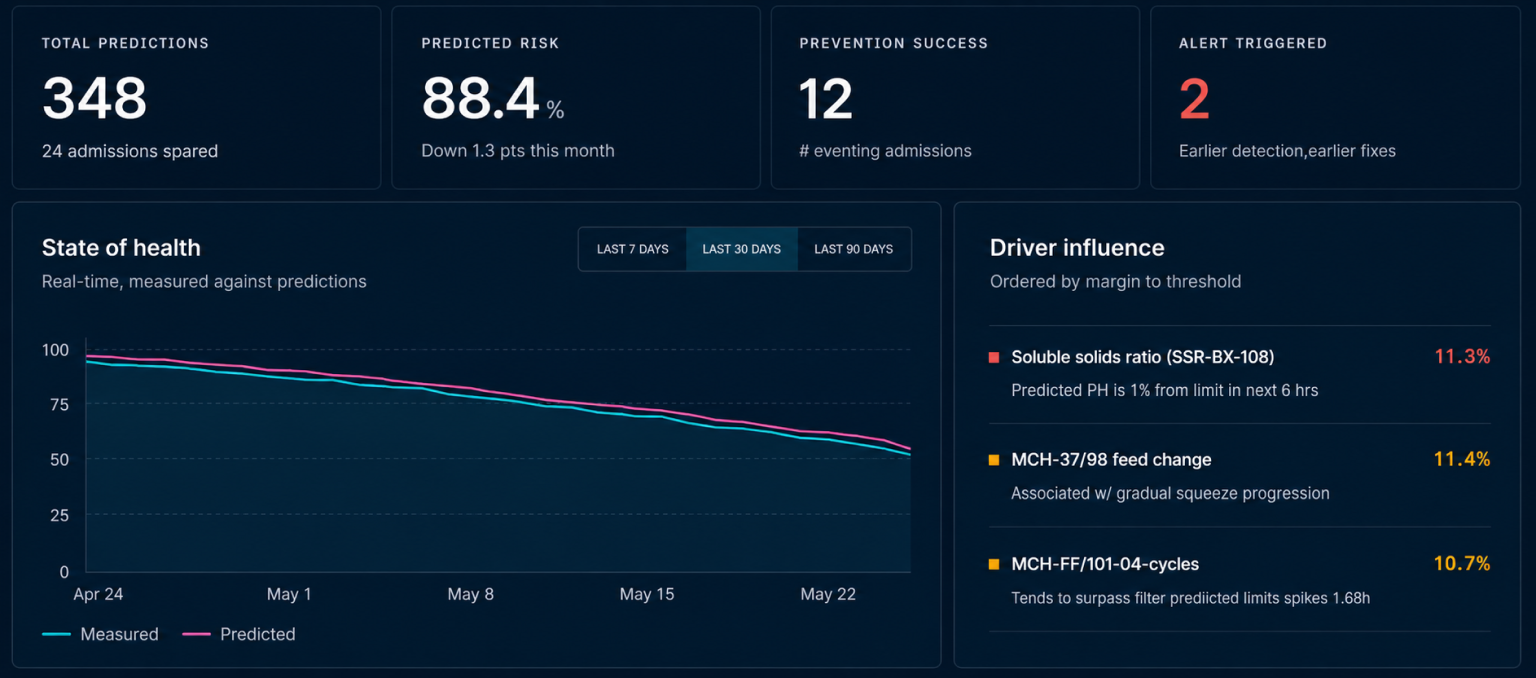
PAaaS for battery degradation is live.
PAaaS now models how an advanced energy material will perform, how it will degrade, and how long it will hold its operating life — before anything is fabricated. Deployed inside industrial R&D environments, it returns calibrated, decision-grade predictions and refines its fidelity through real-world feedback.
Three integrated disciplines. One closed-loop architecture.
Predictive modeling, engineered matter, and scalable fabrication operate as a single architectural system — not as independent services.
- 01
Quantum-Informed Simulation
Physics-constrained simulation of material and system behaviour, grounded in quantum-level fidelity rather than empirical approximation.
- 02
Advanced Material Engineering
Material research oriented to structural resilience, energy density, and resource integrity across long operating horizons.
- 03
Precision Additive Manufacturing
Engineered quantum materials for next-generation energy systems — superconducting conductors, long-lifecycle storage, and optimized electromagnetic architectures.
§ Indicators
Proprietary methods in formal submission
Peer-review submissions in drafting
Engagement-to-pilot duration
Institutional articles
Authored in-house — reviews, positions, and explanatory records of Grunuss's research programme.
A deliberate, sequential progression.
Intelligence precedes infrastructure. Infrastructure precedes realization. Each phase compounds validation before the next is scaled.
Material Properties Prediction
Predictive Analysis as a Service (PAaaS)
Embedded materials intelligence platform deployed within industrial R&D environments. Establishes recurring revenue and refines simulation fidelity through real-world feedback.
Material Properties Prediction§ Footprint
Headquartered in Spain, with operations in Germany and Poland
Four European universities in formalised collaboration
Five energy products in development across the roadmap
Insights
A chronological index of formal institutional notices. The full register lives on
Questions technical buyers and investors ask.
Direct answers on what is sold today, how it differs from testing and conventional simulation, and how an engagement begins.
Predictive Analysis as a Service (PAaaS). It models how an advanced energy material will perform, how it will degrade, and how long it will hold its operating life. It is bought by industrial R&D teams working on batteries and energy materials, and it replaces the earliest, most expensive rounds of build-and-measure prototyping with calibrated, decision-grade prediction.
Conventional simulation approaches can predict material behaviour, but prediction errors can reach up to 20%, particularly when extrapolating beyond the conditions represented in their calibration data. Lifecycle behaviour also takes months or years of cell cycling to observe. These methods typically rely on empirical approximations and fitted parameters, limiting their ability to extrapolate beyond the data they were calibrated on. PAaaS is physics-constrained and quantum-informed rather than empirically fitted, and closes the loop against observed behaviour — predictions are checked against measured results and the fidelity is refined through that feedback.
The first research cycle is closed and Stage 01 of the roadmap — PAaaS, material properties prediction — is in deployment inside industrial R&D environments. Stage 02 (quantum simulation as a service), Stage 03 (engineered quantum energy materials) and Stage 04 (quantum energy systems at infrastructure scale) follow in sequence, each scaled only after the preceding stage is validated. Institutional structure is established, the first capital round is closed, and academic partnerships are formalised.
Battery R&D teams and energy-systems manufacturers: materials scientists selecting candidate chemistries, R&D directors deciding which formulations justify a physical build, and engineering leads accountable for warranty and operating-life claims. Institutional research groups working on advanced energy materials use the same capability.
Through a structured technical briefing. You describe the material system and the decision you need to make; we scope a bounded pilot against your existing measured data so the first predictions can be checked against results you already trust. Average engagement-to-pilot duration to date is about one month.
Contact the research office
Capability and responsibility, advancing together.
For research alignment, institutional partnership, or technical briefing — initiate a structured conversation.